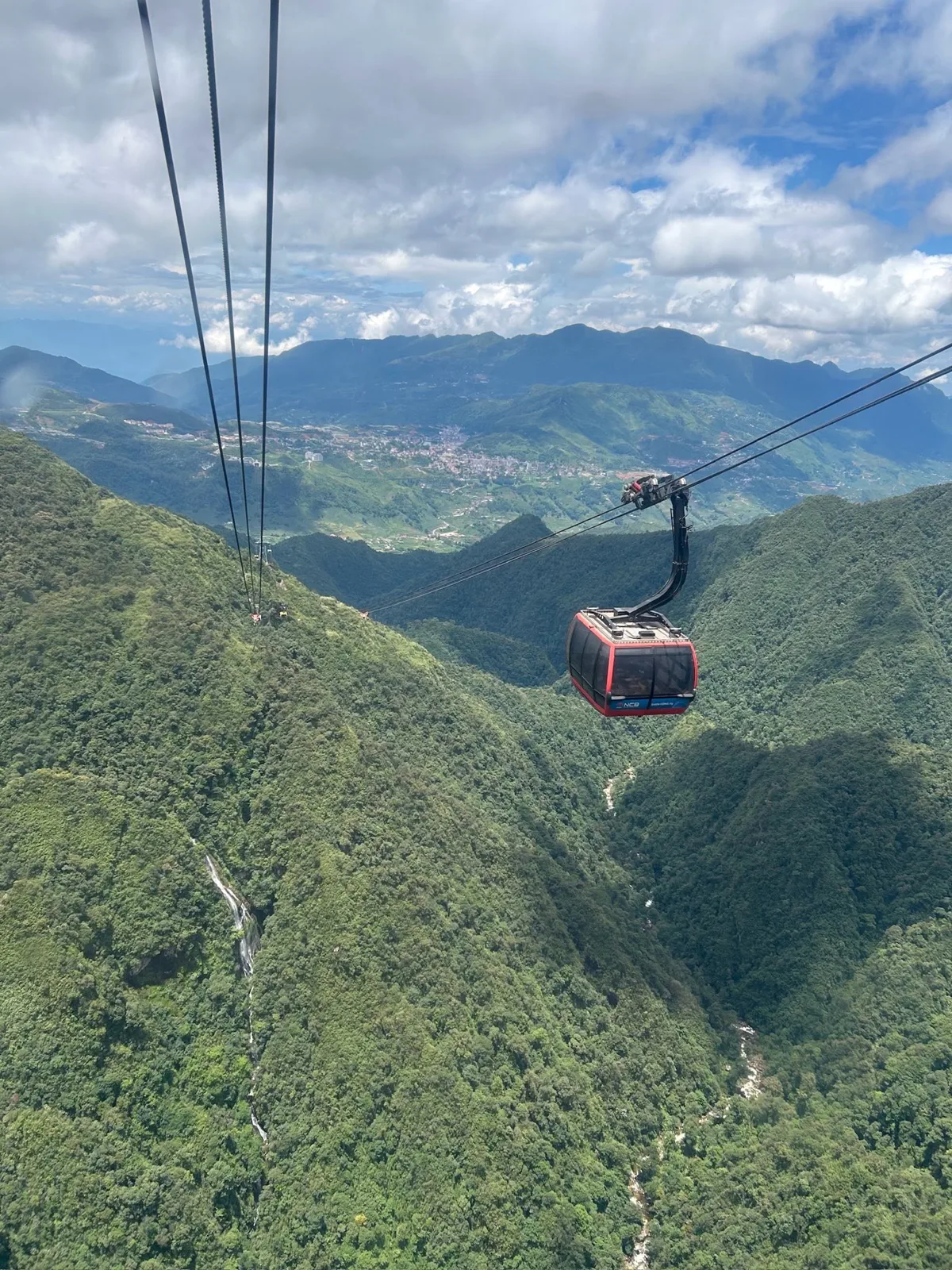
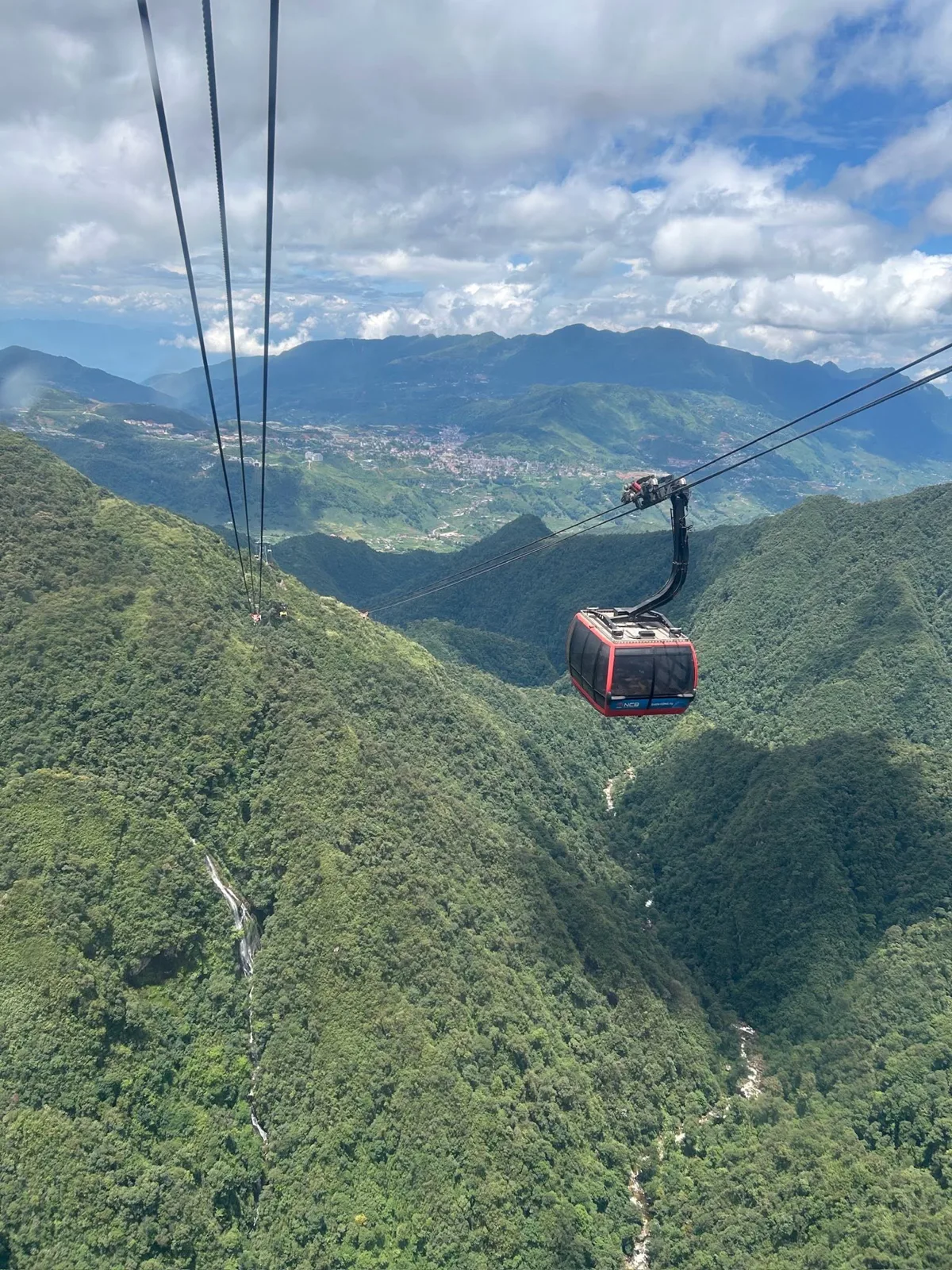
The Fansipan Cable Car provides a swift and practical way to reach the summit of Mount Fansipan, often referred to as the 'Roof of Indochina,' from Sapa. This modern transportation system significantly reduces the journey time, making Vietnam's highest peak accessible to a wider range of visitors who might not undertake the multi-day trek. Instead of days of hiking, the cable car transports passengers to near the peak in approximately fifteen minutes, offering a comfortable and efficient alternative.
Navigating to the Summit: The Fansipan Cable Car System
The journey on the Fansipan Cable Car begins at Hoang Lien Station, which is situated within the expansive Fansipan Legend tourist area. This departure point is conveniently located approximately three kilometers from the iconic Stone Church in the center of Sapa town. From this station, the cable car embarks on its ascent, covering a substantial distance and elevation difference.
The Sun World Fansipan Legend Cable Car System holds two significant world records: it is recognized as the longest three-line cable car system globally, extending 6,292.5 meters, and it boasts the world's highest altitude difference at 1,410 meters. Each cabin is designed to accommodate between 30 and 35 individuals, enabling the system to transfer up to 2,000 passengers per hour between the two terminals. Upon reaching the upper Fansipan cable car station, visitors have the option to continue their ascent by climbing approximately 600 stairs to the actual peak, where they can touch the landmark signifying the roof of Indochina, or they can explore the diverse attractions of the Fansipan Legend complex, which includes serene gardens and spiritual sites.
Practical Information: Tickets, Operating Hours, and Transportation
Acquiring tickets for the Fansipan Cable Car can be done directly at the station. However, to ensure a smoother experience and avoid potential queues, particularly during peak times, booking tickets in advance through a travel agent is often recommended. This can save considerable time and secure your reservation. It is important to note that tickets are valid for one day only and cannot be exchanged or refunded, so visitors should keep them secure.
The pricing for cable car and funicular services varies based on factors such as weekday versus weekend/holiday rates, age (adults over 1.4m, children between 1m and 1.4m, and children under 1m are free), and specific packages. Various options are available, including round-trip cable car tickets, funicular rides for different sections of the ascent, and combo deals that include meals. Operating hours for the Muong Hoa Funicular, Cable Car, and Fansipan Funicular also differ slightly by day of the week, typically starting early in the morning and concluding in the late afternoon. Ticketing counters at both Sapa Station and Hoang Lien Station maintain specific hours.
Reaching Sapa from Hanoi, a distance of about 332 kilometers, offers several transportation choices. For a faster journey, a private car can complete the trip in around four hours, though at a higher cost. Sleeper buses present a more economical option, taking approximately five hours. For those who prefer to enjoy the scenery, the train journey lasts about eight hours. For those interested in overnight rail journeys in Vietnam, the train offers a distinctive experience, allowing passengers to appreciate the changing scenery. Once in Sapa town, reaching the Hoang Lien Cable Car Station is straightforward. Taxis offer the quickest transfer, taking only ten minutes. Alternatively, visitors can enjoy the local scenery by walking approximately 1.7 kilometers from Sapa Church along a well-marked route. A popular and convenient option is the mountain train, which runs from the MGallery hotel in Sapa directly to the cable car terminal, providing scenic views of the Muong Hoa Valley and various villages.
| Service Category | Service Type | Weekdays & Sunday (Adult / Child) | Saturday - Holiday (Adult / Child) |
|---|---|---|---|
| Round Trip Cable Car | Standard | 800,000 VND / 550,000 VND | 850,000 VND / 550,000 VND |
| Applied for Buddhist | 680,000 VND / 480,000 VND | 680,000 VND / 480,000 VND | |
| Funicular | Muong Hoa Funicular (Round Trip) | 200,000 VND | |
| Fansipan Funicular (Way-Up) | 150,000 VND | ||
| Fansipan Funicular (Way-Down) | 120,000 VND | ||
| Combo Deals | Cable Car + Buffet | 1,050,000 VND / 750,000 VND | 1,050,000 VND / 750,000 VND |
| Cable Car + Buffet + Muong Hoa Funicular | 1,200,000 VND / 900,000 VND | 1,200,000 VND / 900,000 VND | |
| Cable Car + Dinner at Ban May (*) | 950,000 VND / 700,000 VND | 950,000 VND / 700,000 VND |
Note: (*) Minimum 6 people per purchase, cable car usage after 1 PM. Prices for children under 1m are free of charge. Tickets are non-exchangeable and non-refundable. Schedules may change due to weather conditions.
Discovering the Fansipan Legend Complex
Mount Fansipan, known as the 'Roof of Indochina,' offers more than just its peak. The Fansipan Legend complex, accessible via the cable car, presents a collection of cultural, spiritual, and natural attractions worth exploring. From the upper cable car station, visitors can either ascend approximately 600 stone steps to the 3,147-meter summit, marked by its distinctive triangular landmark, or opt for a funicular ride to shorten the climb. The summit provides sweeping vistas of the Hoang Lien Son mountain range and the Muong Hoa Valley, often enveloped in clouds.
Beyond the summit, guests can find tranquility in the Bamboo Garden (Vuon Tre), a serene space with winding paths and lush bamboo groves that provide a peaceful retreat. Spiritual seekers can visit several pagodas and temples, including Bao An Thien Tu, a pagoda built in traditional Vietnamese style, and Bich Van Thien Tu, a smaller temple offering a balance of cultural immersion and mountain views. The largest spiritual site is Kim Son Bao Thang Pagoda, featuring ornate shrines, bronze statues, and stone towers that create a sacred atmosphere, especially when mist rolls through. Dominating the landscape is the 21.5-meter Great Amitabha Buddha Statue, Vietnam's tallest bronze Buddha, symbolizing peace. The graceful Guan Yin Statue, dedicated to the Goddess of Mercy, also offers a serene and photogenic spot against the mountain backdrop. For those wishing to avoid the full 600 steps to the summit, Do Quyen Station provides a funicular ride to a higher point. Finally, various viewing platforms and gardens at the Heavenly Garden offer prime locations for photography and 'cloud hunting,' where visitors can witness the famous 'sea of clouds' phenomenon. From different vantage points within the complex, visitors can also admire the terraced rice fields, villages, and rivers of the beautiful Muong Hoa Valley below.
Essential Considerations for a Fansipan Visit
Before planning a trip to Mount Fansipan, it is crucial to consider several practical aspects to ensure a safe and enjoyable experience. The high altitude (over 3,000 meters) combined with high humidity and potentially lower oxygen levels means that individuals with pre-existing heart or lung conditions should exercise caution and consult medical advice before traveling. Any unusual symptoms, such as breathing difficulties, should be immediately reported to station staff.
Proper preparation is key for a comfortable visit. Visitors should carry snacks and water, as services on the mountain may be more expensive. Dressing in layers is advisable, allowing for adjustments as temperatures can vary significantly from the base to the summit. Warm clothing, including gloves, hats, and scarves, is particularly important for morning or afternoon visits, especially during cooler months. For those planning to ascend the 600 steps to the peak, comfortable and sturdy walking shoes are essential. Furthermore, reviewing essential tips for first-time visitors to Vietnam can enhance overall trip preparation.
The optimal time to visit Fansipan is generally between March and May (spring) and October to November (autumn). During these periods, the climate is typically milder and more agreeable, providing clearer skies and comfortable conditions for sightseeing and outdoor activities. Families with children and elderly travelers will find morning departures (before 9:30 AM) more pleasant due to clearer weather, fewer crowds, and milder temperatures. Taking breaks at intermediate stations like Bich Van Thien Tu or the Bamboo Garden can help manage the pace. Packing light jackets, hats, and water is recommended, with warmer attire necessary for winter months (November to February).
For photography enthusiasts, the summit landmark, the Great Amitabha Buddha, the Heavenly Garden's cloud-hunting decks, and the Muong Hoa Valley viewpoints offer excellent opportunities. Sunrise (6:00–7:00 AM) and sunset (4:30–5:30 PM) often provide the most dramatic lighting and atmospheric conditions for capturing the iconic 'sea of clouds.' However, drone usage is generally restricted near pagodas and temples and typically requires staff approval in open areas. Weather conditions on Fansipan are variable; temperatures at the summit range from 5°C to 25°C in summer and 0°C to 9°C in winter, with high humidity. Fog and heavy mist are common, particularly from January to February and July to August, which can obscure views. It is advisable to check weather forecasts before your trip.
Weekends and Vietnamese public holidays tend to attract larger crowds, potentially leading to longer queues for the cable car (up to 1-2 hours). For a more relaxed experience, visiting on weekdays during spring or autumn is recommended, with mornings (8–10 AM) and late afternoons (after 3 PM) generally being less busy. On-site facilities at both the base and summit stations include restaurants, souvenir shops, and restrooms. Free WiFi is available at the Fansipan Legend station and the summit complex. While food and beverages are available, bringing your own water is suggested, especially if traveling with children. For elderly or disabled travelers, the funicular train from Do Quyen Station can reduce the number of steps to the summit, though some stair climbing remains unavoidable. Wheelchair accessibility is limited in the higher sections of the complex. Paid parking is available at the Fansipan Legend Station for motorbikes and cars.
Combining Fansipan with a Sapa Exploration
To fully appreciate both the Fansipan Cable Car experience and the wider attractions of Sapa, a stay of two to four days in the area is often recommended. A suggested itinerary might begin with an arrival in Sapa from Hanoi, followed by an afternoon trek to Cat Cat Village. This lively village offers insights into the daily life and traditions of the Hmong ethnic group, concluding with a return to Sapa town center.
The second day is ideally dedicated to conquering Mount Fansipan. Starting early, visitors can head to the Fansipan Cable Car station for the ascent. After the approximately 15-minute cable car ride, a choice can be made between climbing the 600 steps to the summit or taking an additional funicular ride to reach the very top. The subsequent days can then be spent exploring other local villages. Tours to Ta Phin, Lao Chai, and Ta Van Villages provide opportunities to interact with local ethnic communities and witness their distinct cultures. Ta Phin, a Red Dao village, is known for its cultural heritage and hospitality. Lao Chai, home to Giay and Black H'mong communities, marks the beginning of the Muong Hoa Valley and offers views of terraced fields. Adjacent to Lao Chai, Ta Van Village houses Giay, H'mong, and Red Dao ethnic groups, featuring the Muong Hoa Stream and May Bridge, adding to its allure. These excursions allow visitors to immerse themselves in the natural splendor and indigenous cultures of the region before departing Sapa.
Frequently Asked Questions
How long does the Fansipan Cable Car ride take?
The cable car journey typically lasts between 15 and 20 minutes, covering a distance of 6.3 kilometers and ascending 1,410 meters in altitude.
How many people fit in one cabin?
Each cable car cabin is designed to accommodate between 30 and 35 passengers, making it suitable for both individual travelers and larger groups.
Do I need to book the cable car tickets in advance?
While purchasing tickets at the station is an option, booking in advance online or through a travel agent is advisable, especially during weekends, holidays, or peak travel seasons, to avoid lengthy queues.
What are the Fansipan Cable Car opening hours?
Operating hours can vary slightly depending on the day of the week, but generally, the last ride up to Fansipan is around 3:30 PM, with the system closing around 5:00 PM. It is always recommended to verify the most current schedule, as operations can be adjusted due to weather conditions.
Is the cable car safe for children and seniors?
Yes, the Fansipan Cable Car system is modern and considered safe for all ages. However, due to the thin air at altitudes exceeding 3,000 meters, seniors, infants, and individuals with heart or lung conditions should consult their doctor before making the trip.
What’s the best time of year to take the Fansipan Cable Car?
The most favorable weather for visiting Fansipan is typically during spring (March to May) and autumn (October to November). These months often bring clearer skies and more comfortable temperatures, providing the best viewing conditions.
How many steps are there from the cable car station to the summit?
From the upper cable car station, there are approximately 600 stone steps leading up to the absolute peak of Mount Fansipan.
Can I bring food or drinks onto the cable car?
Bringing snacks and water is permitted and often recommended, as food and beverage prices at the summit complex tend to be higher than in Sapa town.
Can I fly a drone at Fansipan?
Generally, drone use is restricted within the Fansipan Peak and Sun World Fansipan Legend areas due to safety protocols, weather considerations, and management regulations. It is best to check with local authorities or on-site staff for current rules before bringing a drone.