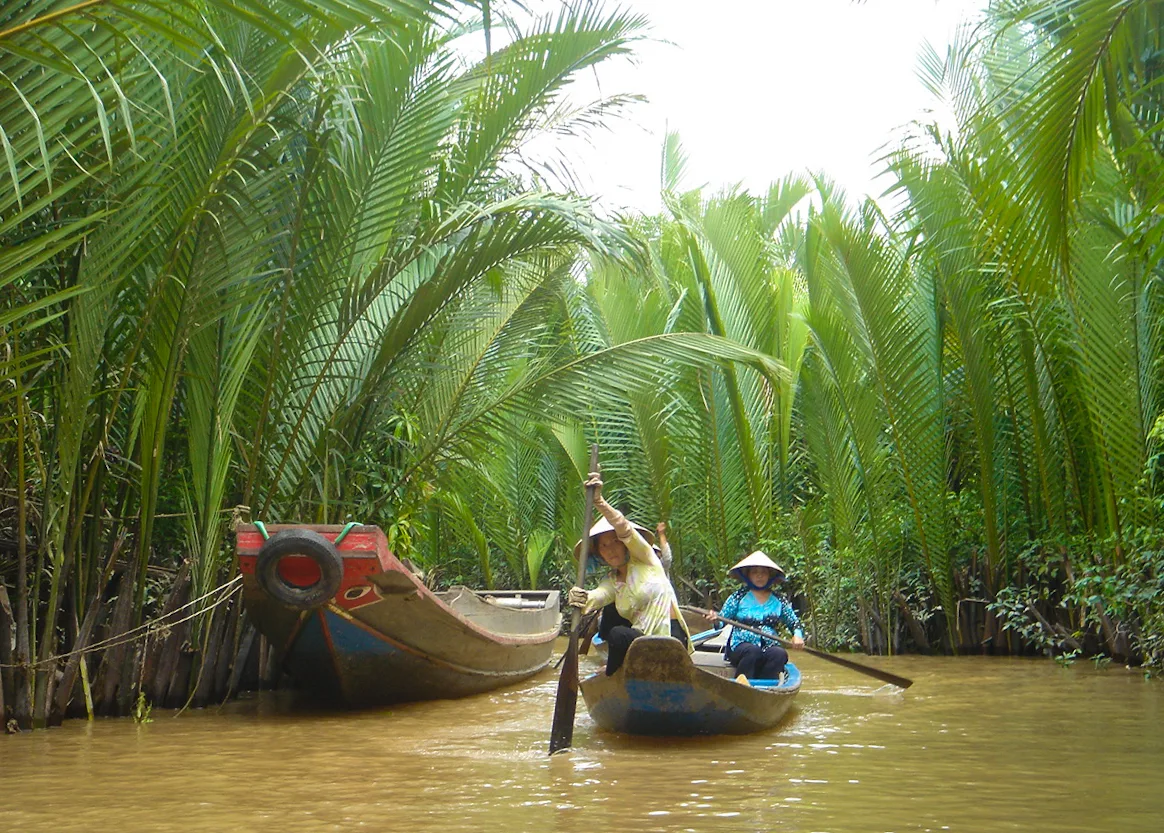
The Mekong Delta region of Vietnam is renowned for its distinctive floating markets, where local life and commerce converge on the riverways. These markets offer a unique glimpse into traditional trading practices and the agricultural bounty of the delta. Understanding the best times and locations can enhance a traveler's experience of these aquatic marketplaces.
Understanding Mekong Delta Floating Markets
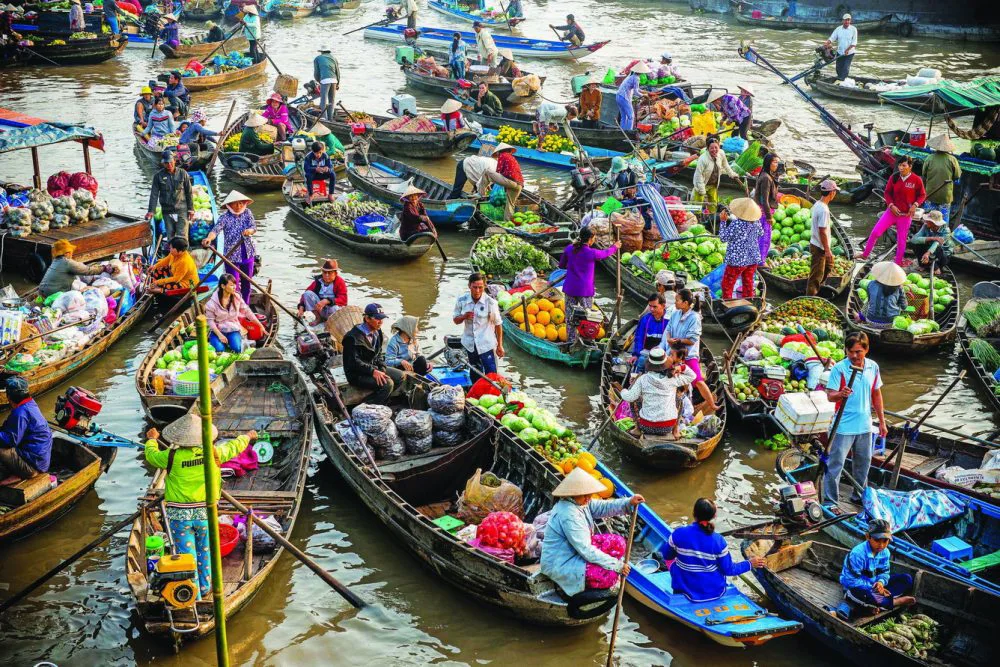
Floating markets in the Mekong Delta serve as vital hubs for trade, reflecting a centuries-old way of life where rivers are the primary arteries of commerce. Instead of roadside stalls, vendors operate from boats, displaying their goods directly on the water. A common sight is a long pole attached to each boat, from which samples of the products for sale are hung, allowing buyers to easily identify what each vendor offers from a distance.
These markets typically begin their activity in the very early morning, often before sunrise, reaching their peak as the sun rises. This timing allows for the freshest produce to be exchanged and for goods to be transported to various towns and villages throughout the day. The atmosphere is characterized by the sounds of boat engines, the gentle lapping of water, and the lively chatter of buyers and sellers.
Key Floating Markets of the Mekong Delta
The Mekong Delta hosts several prominent floating markets, each with its own character and specialties. Here is an overview of some notable locations:
Cai Rang Floating Market
Considered one of the most well-known floating markets in the Mekong Delta, Cai Rang is situated in Can Tho province. It lies approximately 6 kilometers from Can Tho city center and about 170 kilometers from Ho Chi Minh City. This market functions much like a conventional market, offering a wide array of goods, but all transactions occur on the water. Produce, household items, and prepared foods are readily available. Notably, the market is where chef Gordon Ramsay reportedly sampled Hu Tieu, a popular Southern Vietnamese noodle soup, for the first time.
Vendors here utilize tall poles to display their wares, making it simple for customers in other boats to see what is being sold. The market experiences its highest activity between 6:00 AM and 7:00 AM. Visitors are advised to arrive early to avoid larger crowds and the midday heat. While a nearby bridge offers a view of the market, navigating the waterways by boat provides a more direct experience. Boats for visiting Cai Rang market can be hired, with prices starting around 15 USD for a vessel accommodating up to seven passengers. Tour packages that include transportation are also available.
Cai Be Floating Market
Located closer to Ho Chi Minh City, the Cai Be market is thought to have origins in early trading activities by people from central Vietnam. While its operational style is similar to other floating markets, its geographical position is distinct: it sits at the confluence of the Tien River and three provinces—Tien Giang, Vinh Long, and Ben Tre. Travel from Ho Chi Minh City to the wharf takes approximately two hours by car, followed by an hour-long boat ride to reach the market.
Visitors can purchase tickets for a shared boat trip, typically costing between 40,000 VND and 80,000 VND for a two-hour excursion. Renting an entire boat for a group is also an option, though this can be significantly more expensive, potentially exceeding 600,000 VND. The market is busiest from 4:00 AM to 6:00 AM, with boats beginning to gather as early as 3:00 AM. The period around sunrise is considered ideal for experiencing the market's full array of colors and sounds. Activity largely ceases after 8:00 AM.
Phong Dien Floating Market
Approximately 17 kilometers southeast of Can Tho's city center, Phong Dien is one of two floating markets in the area. It is often described as having a more rustic character compared to the larger Cai Rang market. Traders convene from the early hours to purchase fresh produce and fruits for onward sale. The peak period for activity occurs from 5:30 AM to 6:30 AM, when numerous boats fill the waterways.
At Phong Dien, a wide variety of Mekong Delta products are available. Prices are generally consistent for both locals and travelers. Beyond agricultural goods, the market also features household items and tools, such as canoes, roofing materials, knives, hoes, machetes, fishing equipment, and woven baskets. Additionally, vendors sometimes offer coffee and breakfast options like banh mi or various noodle soups.
Nga Bay Floating Market
Also known as Phung Hiep floating market, Nga Bay has been a central trading point for residents of Nga Bay town since 1915, making it over a century old. Boats laden with diverse fruits and vegetables create a colorful spectacle. Typically, each boat specializes in a single type of product, indicated by items displayed on a pole at the front. Besides produce, some vendors sell live animals, including lizards, turtles, iguanas, snakes, and birds, which are securely contained.
Nga Bay tends to start a little later than some other markets, with its most active period around 7:00 AM. To reach Nga Bay, travelers typically first journey to Can Tho from Ho Chi Minh City, a bus ride of about five hours. From Can Tho, hiring a private car or taking a taxi to Nga Bay, located approximately 30 kilometers away, is recommended. Upon arrival at the bay, boats can be hired to explore the market and nearby points of interest.
Long Xuyen Floating Market
Situated in An Giang Province, Long Xuyen Floating Market is considered a less tourist-heavy destination, appealing to those seeking a quieter experience away from larger crowds. While it may not match the scale of Cai Rang market in Can Tho City, its tranquil atmosphere offers a closer connection to local daily life and the cultural essence of the Mekong Delta. Like other floating markets, an early morning visit is recommended to witness its most active period.
Observing local exchanges of goods on the river provides a unique insight into regional customs. This market operates seasonally, primarily during the 7th to 10th lunar months, which requires specific trip planning for those wishing to visit.
Tra On Floating Market
Tra On Floating Market has a long history and is known for its distinct cultural characteristics reflecting the riverine community. Located approximately 250 meters from the mouth of the Tra On rivulet, the market has expanded over time to a length of 300 meters and a width of 150 meters. It comprises two main sections: one along the riverbanks and another floating on the river itself, both exhibiting lively trading activities.
The market commences operations as early as 2:00 AM to 3:00 AM, with peak activity observed from 5:00 AM to 6:00 AM onwards. Even in the early morning mist, numerous boats gather for purchasing and selling, with products categorized and weighed for traders. The market remains open throughout the day. A unique aspect of Tra On is its reliance on the water level of the Hau River; it is typically most crowded in the morning, coinciding with high tide. This means visitors can experience different facets of the market's beauty at various times of the day.
Nga Nam Floating Market
Located roughly 60 kilometers from the center of Soc Trang city, Nga Nam floating market is found in the town of the same name. The Vietnamese term “Nga Nam” translates to “five directions,” aptly describing its location at the intersection of five river branches that flow towards Ca Mau, Vinh Quoi, Long My, Thanh Tri, and Phung Hiep. From 3:00 AM to 4:00 AM, the river becomes filled with boats and motorboats. The busiest hours typically span from 5:00 AM to 7:00 AM, with activity extending throughout the day during major festivals.
Due to its strategic position, Nga Nam serves as a central hub for hundreds of boats and canoes trading all sorts of goods. The market becomes particularly lively as the Lunar New Year approaches. The ideal time to visit is early in the morning, as the sun rises, when local traders are most active. Products range from rice, meat, fresh fruits, and other staple items to televisions and electronic goods, making Nga Nam one of Southern Vietnam's most active floating markets.
Comparison of Mekong Delta Floating Markets
| Market Name | Location | Busiest Time | Key Products | Unique Features | Approx. Cost (Boat Hire) |
|---|---|---|---|---|---|
| Cai Rang | Can Tho | 6:00 AM - 7:00 AM | Produce, household goods, noodle soup | Most famous, goods on poles, bridge view, Gordon Ramsay connection | From 15 USD (7 pax boat) |
| Cai Be | Tien Giang, Vinh Long, Ben Tre junction | 4:00 AM - 6:00 AM | Fruits, vegetables | Closest to HCMC, river confluence | 40k-80k VND (shared 2hr), >600k VND (private) |
| Phong Dien | Can Tho (17km SE of city) | 5:30 AM - 6:30 AM | Agricultural products, tools, crafts, breakfast | More rustic, consistent pricing for all | Not supplied |
| Nga Bay (Phung Hiep) | Nga Bay town (Soc Trang) | ~7:00 AM | Fruits, vegetables, live animals | Over 100 years old, one product per boat | Not supplied |
| Long Xuyen | An Giang Province | Early morning | Local produce, cultural items | Less touristy, peaceful, seasonal (7th-10th lunar months) | Not supplied |
| Tra On | Tra On rivulet mouth (Vinh Long) | 5:00 AM - 6:00 AM (open all day) | Diverse goods | Activity depends on Hau River tide, two sections (riverside & floating) | Not supplied |
| Nga Nam | Nga Nam town (Soc Trang) | 5:00 AM - 7:00 AM | Rice, meat, fruits, electronics | Intersection of five rivers, very diverse goods, lively near Lunar New Year | Not supplied |
Planning Your Visit to a Floating Market
To fully appreciate the experience of a Mekong Delta floating market, careful planning is beneficial. The most crucial aspect is timing: nearly all markets are at their most active and authentic in the early morning hours, often before or just after sunrise. Arriving early allows visitors to witness the peak of trading activity and avoid the heat that develops later in the day.
Transportation typically involves hiring a small boat, either privately or as part of a group tour. Many local operators offer excursions that include transfers from nearby cities like Can Tho or Ho Chi Minh City. When considering your budget, remember that shared boat tickets are more economical, while private boats offer greater flexibility and personal space. For those traveling independently, reaching a major hub like Can Tho is often the first step, from which local transport can be arranged to specific markets. Visitors to Can Tho might also find it useful to consult a Can Tho City banking guide for managing finances during their stay.
What to Expect at a Floating Market
A visit to a floating market offers a sensory experience unlike any other. The sights include boats piled high with colorful tropical fruits, fresh vegetables, and various other goods. The sounds are a mix of engine hums, vendors calling out their wares, and the gentle lapping of water against boat hulls. The air often carries the aroma of fresh produce and cooked food.
Beyond agricultural products, many markets also feature boats selling prepared meals, such as noodle soups, coffee, and local snacks, allowing visitors to enjoy breakfast directly on the water. You might also find household tools, fishing gear, and local crafts. Engaging with the friendly local vendors, even through simple gestures, adds to the authenticity of the experience. For those interested in acquiring unique items, understanding essential souvenirs and unique purchases from a trip to Vietnam can enhance your shopping.
Choosing the Right Floating Market for Your Trip
Selecting which floating market to visit depends on individual preferences and travel itineraries. If proximity to Ho Chi Minh City is a priority, Cai Be offers a relatively shorter travel time. For those seeking the most well-known and comprehensive market experience, Cai Rang is a popular choice, though it can be more crowded. If an authentic, less tourist-oriented atmosphere is desired, Phong Dien or Long Xuyen might be more suitable, with Long Xuyen also offering a specific seasonal window for visits.
Nga Bay and Nga Nam markets provide insights into historical trading posts and diverse product offerings, including unique items like live animals at Nga Bay or electronics at Nga Nam. Tra On market offers the flexibility of being open all day, with its activity influenced by river tides. Each market presents a distinct facet of the Mekong Delta's riverine culture, allowing travelers to tailor their visit to their interests. When traveling from larger cities to these delta regions, understanding banking services in Ho Chi Minh City can be helpful for financial planning.
Frequently Asked Questions
What is the best time of day to visit a floating market?
The optimal time to visit most floating markets in the Mekong Delta is early in the morning, typically between 5:00 AM and 7:00 AM. This period sees the highest level of trading activity, the freshest produce, and a cooler climate, offering the most authentic experience.
How do I get to the floating markets?
Accessing the markets usually involves traveling to a nearby city like Can Tho or Soc Trang, then hiring a local boat or joining an organized tour. Some markets, like Cai Be, are accessible via a car journey from Ho Chi Minh City followed by a shorter boat ride.
What kinds of items are sold at these markets?
Floating markets primarily sell agricultural products such as fresh fruits, vegetables, and rice. Many also offer prepared foods like noodle soups and coffee, as well as household goods, tools, and sometimes even live animals or electronics, depending on the market.
Are floating market prices fixed or negotiable?
While some markets, like Phong Dien, report consistent pricing for all customers, bargaining is often a common practice in many Vietnamese markets. It is generally acceptable to politely negotiate prices, especially for non-food items or when purchasing larger quantities.
Is it possible to eat breakfast at a floating market?
Yes, many floating markets feature vendors selling a variety of breakfast dishes and beverages directly from their boats. Visitors can typically enjoy local noodle soups, banh mi, coffee, and fresh fruit juices while observing the market's activity.