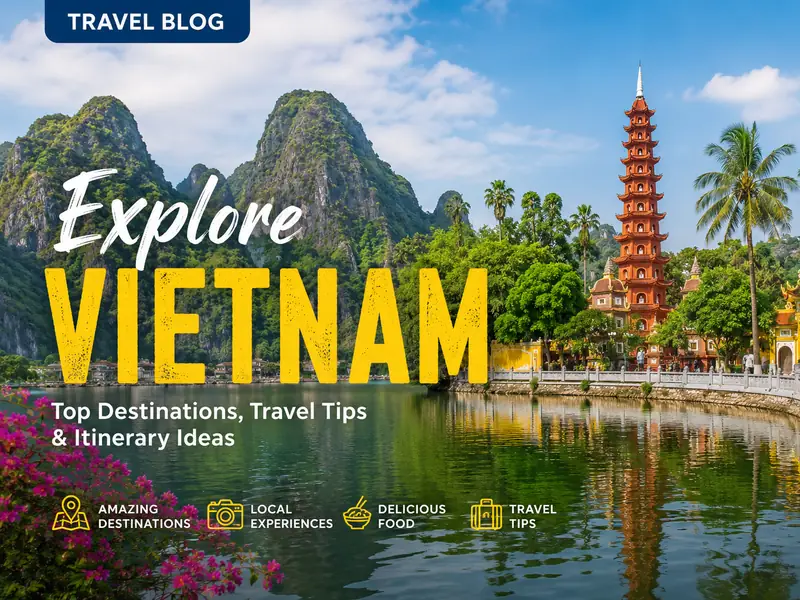
Vietnam and Cambodia travel brings together coastal landscapes, river life and centuries-old temple complexes across two neighbouring Indochina nations. This guide summarizes the seasons, key sights, common transfer options and basic etiquette so first-time visitors can plan confidently.
What Vietnam and Cambodia travel involves: background and basics
Vietnam and Cambodia sit side by side in Southeast Asia and share parts of the Mekong basin and cultural influences. Vietnam is officially very diverse: the country recognises 54 ethnic groups, and several religions are practiced, including Buddhism, Catholicism, Protestantism, Islam, Caodaism and Hoa Hao Buddhism. Ancestor veneration at home remains widespread, with many families observing lunar-month rituals.
Cambodia is strongly shaped by Theravada Buddhism, which is practiced by around 80% of the population and has guided much of the country's cultural development over centuries. Historical links between Cambodian Buddhism and the south-central Vietnamese practice can be traced in some border regions. For planning purposes, visitors typically treat the two countries as a single short-region itinerary but should allow time to adapt to local transport and climate differences.
Key highlights and must-see places in Vietnam and Cambodia
Each country offers distinctive attractions. In Vietnam, Halong Bay in the Gulf of Tonkin is a widely known UNESCO-listed site made up of thousands of limestone islets rising from the water. Coastal central Vietnam has preserved urban and architectural heritage, with Hoi An's historic quarter a popular stop because of its conserved houses, streets and marketplaces.
Cambodia is best known for the Angkor temple complex around Siem Reap; the walled moat and extensive ruins are a primary draw for international visitors. Phnom Penh's Wat Phnom marks the historic origin of the capital and remains an active shrine and meeting point for locals and travellers. Along the Mekong there are also river cruise options that showcase riverside communities and scenery.
- Halong Bay: karst islands and boat excursions.
- Hoi An: old-town architecture, markets and tailor shops.
- Angkor Wat: large archaeological complex near Siem Reap.
- Wat Phnom: a compact urban temple that visitors often include in city routes.
Practical tips for planning a Vietnam and Cambodia trip
Climate and timing matter. Both countries experience two broad seasons: a wet season and a dry season. Cambodia is generally hotter and drier than many parts of Vietnam; temperatures commonly range from about 21°C to 35°C and can spike higher in some months. Heavy rains occur with monsoon shifts—short but intense downpours in the southwest monsoon months and longer wet periods at other times. Many travellers prefer to visit between November and April when conditions tend to be less humid and rain is lighter.
Money and payments: Vietnam uses the Vietnamese dong (VND); exchange rates vary over time. Cambodia widely accepts US dollars for many transactions, though small change is often given in Khmer riel. For more details on local currency practices and practical advice, see the Cambodia currency guide.
- Pack a lightweight waterproof layer and quick-dry clothing for sudden rain.
- Carry small-denomination US dollars in Cambodia for everyday purchases.
- Bring local contact numbers and photocopies of travel documents in case of loss.
Cultural context and etiquette to respect locally
Cultural norms reflect religion, history and community practices. In Vietnam, diverse ethnic customs mean local etiquette can differ between highland communities and urban centres; ancestor worship and family-based rituals are important to many households. In Cambodia, Buddhist temples remain active places of worship: modest dress, removing shoes, and calm behaviour are expected at religious sites.
Language basics and behaviour help smooth interactions. Learning a few simple phrases in Vietnamese or Khmer and observing modest dress customs at temples is useful. Public displays of affection are generally discouraged in conservative settings, and it is customary to ask permission before photographing people in private spaces or ritual contexts.
- When visiting temples, cover shoulders and knees and remove hats.
- Accept water or refreshments when offered in rural homes as a polite gesture.
- Ask before taking photographs of monks or ceremonies.
Who benefits most from this kind of trip
First-time visitors who appreciate history, architecture and varied landscapes will find a combined Vietnam–Cambodia itinerary rewarding. City sights, rural markets and river travel create a varied pace: some days involve walking and museum visits, others focus on boat journeys or relaxed market browsing. Travellers on a mid-range or budget budget will find cost-effective public transport and tourist services throughout both countries; those seeking medical or specialised services should research facilities in advance.
Active travellers can incorporate cycling and short countryside loops in central Vietnam; for information on cycling routes around Hoi An and Hue, local guides and route descriptions are available from regional sources. Visitors aiming to include Hoi An shopping and tailoring should allow extra time for fittings; for practical advice on local markets and tailor services, consult the Hoi An shopping guide.
Comparisons, transfer options and travel choices
Moving between Vietnam and Cambodia can be done by air, road or river. Flight connections are more direct from major Vietnamese airports to Phnom Penh or Siem Reap; several carriers operate services from Ho Chi Minh City and Hanoi. Road transfers by bus are widely used and are the lowest-cost option for many travellers. Cruises along the Mekong provide a slower, scenic alternative for some border crossings and regional journeys.
Reported fare ranges and typical durations vary by route and carrier. For example, buses from southern Vietnam to Phnom Penh commonly take around six hours, while routes to Siem Reap may require 10–11 hours depending on stops. A useful source of practical schedules for some coastal bus routes is the bus guide to Halong Bay connections, which also covers transfer times and traveller tips for overland journeys.
| Mode | Typical duration | Reported cost range | Notes |
|---|---|---|---|
| Air | 1–2 hours between major airports | Source-reported ranges vary by route | Fastest option; book ahead during peak season. |
| Road (bus) | 6–11 hours depending on origin/destination | Lower-cost fares commonly reported (example: inexpensive cross-border buses) | Economical; expect basic comfort on long legs. |
| River cruise | Varies; multi-hour to multi-day | Often marketed in a wide price range | Scenic and slower; useful for experiencing Mekong riverside life. |
For travellers focusing on coastal or northern Vietnam logistics—such as connections to Halong Bay—there are also specific bus options and transfer guides that address schedules and tips for the road. See the detailed bus guide for transfer advice and timing between Ninh Binh and Halong Bay for practical route-level information.
Frequently Asked Questions
When is the best time to visit Vietnam and Cambodia?
Most find November to April offers milder weather and less rainfall across the region, though exact conditions vary by location. April can be very hot in some areas and is also when Cambodia observes its traditional New Year celebrations.
What currencies should I carry?
Vietnam primarily uses the Vietnamese dong (VND). Cambodia commonly accepts US dollars for many transactions while giving small change in Khmer riel; visitors often carry a mix of local currency and small US bills. For a full practical breakdown, consult the dedicated currency guide referenced above.
How long does it take to travel between major Vietnamese cities and Cambodia?
Air travel between main airports is short by international standards, while buses on overland routes can range from around six to eleven hours depending on the endpoints. River crossings and cruises take longer but offer different scenery and pace.
Do I need special vaccinations or insurance?
Visitors should check current health recommendations and travel-advice resources for vaccinations and health precautions. Purchasing travel insurance that covers medical care and trip disruptions is commonly advised.
Are English-language services widely available?
In major tourist areas, many staff in hotels, attractions and restaurants speak some English, but proficiency can vary. Learning a few key phrases and carrying an address card in the local language for your destination will help with taxis and directions.